

Warm White vs Cool White vs Multicolor Christmas Lights: How to Choose

Updated: 1 day ago
Short answer: Warm white is the safest choice for most homes, especially red or tan brick and Austin stone. Cool white suits white, gray and modern exteriors. Multicolor gives a fun, classic look that works well on trees and family-focused displays. Pick one plan per area and stay consistent.
Light color sets the mood of a display more than any other choice. The same roofline can feel elegant, crisp or playful depending on the bulbs.
This guide explains each option, then matches colors to the house materials common across North Texas. It also covers trees, wreaths and business brand colors.
Quick pick
Start here if you want a fast answer.
If your property is... | Try | Why |
|---|---|---|
Red, orange or tan brick | Warm white | Golden light flatters warm tones |
Austin stone or limestone | Warm white | Brings out cream and honey colors |
White stucco or painted white brick | Cool white or pure white | Crisp light keeps white walls looking clean |
Gray, charcoal or modern farmhouse | Pure white or cool white | Matches cool paint and black trim |
Family home with kids | Multicolor or warm white with color accents | Fun and nostalgic |
HOA entrance or commercial building | Warm white plus one accent color | Elegant and consistent from the street |
Warm white, pure white and cool white explained
White lights come in different color temperatures, measured in kelvin (K). Lower numbers look warmer and more golden. Higher numbers look whiter and bluer.
Type | Approximate color temperature | Look and feel |
|---|---|---|
Warm white | About 2,700K to 3,000K | Golden, cozy, like a classic bulb or candlelight |
Pure or soft white | About 3,500K to 4,000K | Bright, neutral white with no strong tint |
Cool white | About 5,000K to 6,500K | Icy, crisp, slightly blue; reads as winter |
Names vary between makers. One brand's "pure white" can look like another's "cool white." When you can, compare bulbs side by side at night before you decide.
Warm white
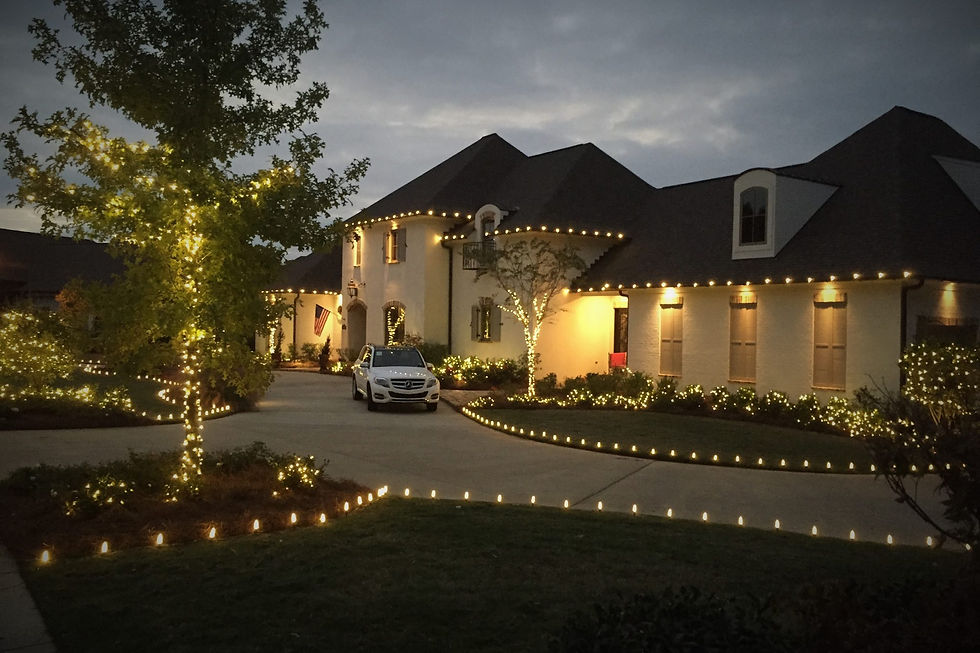
Warm white is the traditional look. It feels inviting and works with most exteriors and landscapes. It is also the closest LED match to old incandescent bulbs. See LED vs incandescent Christmas lights for more on that.
Cool white
Cool white gives a snowy, modern effect. It is striking on white houses, glass and steel buildings, and icicle-style displays. On warm brick, it can look harsh.
Multicolor: classic vs modern mixes
Multicolor lights bring energy and nostalgia. The key is choosing a mix on purpose rather than mixing whatever strings you have.
Classic mix: red, green, blue, amber and orange. The traditional family look.
Red and green: festive and bold, especially on trees and wreaths.
Red and white: candy-cane style, clean on rooflines and walkway lights.
Blue and white: a cool winter palette that suits modern homes.
Gold and warm white: elegant and upscale with a soft glow.
Balance matters. Too many colors in too many places can look busy. Too few colored strings across a big property can look thin. A good rule is one color plan for the roofline and a second, related plan for trees and accents.
Twinkle, animation and app control
Some multicolor sets twinkle, chase or change color. Used lightly, motion adds life to trees and accents. Used everywhere, it can feel busy from the street.
If you want to change colors through the year, permanent lighting is another option. Our PermaLites 365 system is app-controlled, so one roofline can show warm white for Christmas and other colors for other holidays. See permanent vs seasonal Christmas lights to compare the two.
Matching lights to brick, stone and stucco
North Texas homes use a lot of brick and stone, and the color of the wall changes how the light looks. Here is what tends to work.
House material | Strong choices | Use with care |
|---|---|---|
Red or orange brick | Warm white; red and warm white | Cool white can look harsh against red brick |
Tan or beige brick | Warm white; gold and warm white | Heavy blue tones can look washed out |
Austin stone or limestone | Warm white; multicolor on trees | Cool white can make cream stone look gray |
White stucco | Cool white or pure white; blue and white | Very warm white can look yellow on bright walls |
Painted white or gray brick | Pure white; cool white; multicolor | Mixing warm and cool whites on one line |
Dark siding or charcoal paint | Warm white or multicolor for contrast | Dim, sparse strings disappear |
Before you commit, test at night. Hang a short run of each option near the front door, then look from the street. Photos on a phone can shift color, so trust your eyes.
Trim color matters too. Black or bronze trim pairs well with warm white. White trim looks sharp with pure or cool white.
Rooflines vs trees vs wreaths
You do not need the same color everywhere. Many strong displays use one color on the architecture and another in the landscape.
Rooflines: one clean color reads best from the street. Warm white is the most common choice.
Trees: multicolor or a contrasting color adds depth. Trunk wraps in warm white and canopies in color can work well together.
Wreaths and garland: warm white lights bring out greenery, bows and ribbon.
Walkways and shrubs: repeat the roofline color to tie the yard to the house.
Keep each zone consistent. One roofline with two kinds of white side by side looks like a mistake, not a design.

Business and brand colors
Commercial properties often light in brand colors. That can work well when it is used with restraint.
Use warm white as the base on the building and add brand color on trees, poles or entry features.
Repeat the same colors at every entrance so the property reads as one design.
For HOAs, pick one scheme for every entrance and amenity so the community looks consistent.
Car dealerships can match brand colors on the frontage and keep the showroom warm and inviting.
We design displays for commercial Christmas lighting and car dealership holiday lighting across Dallas-Fort Worth. For homes in Plano, Frisco, Allen and Richardson, see our residential Christmas lighting service. Because the product is leased and stored by us, you can choose a new color plan another year. For more inspiration, browse our creative Christmas lighting ideas for every space.
Is warm white or cool white better for Christmas lights?
Neither is better everywhere. Warm white suits most brick, stone and traditional homes. Cool white suits white, gray and modern exteriors. Compare both on your house at night if you can.
Do white and colored lights look good together?
Yes, when each has its own zone. A warm white roofline with multicolor trees is a common and balanced mix. Avoid mixing them randomly on the same line.
What color lights look best on a brick house?
Warm white is the most reliable choice on red, orange and tan brick. Red with warm white or gold with warm white also work well. Cool white can look harsh on warm brick.
Is pure white the same as cool white?
Not usually. Pure white is a neutral white, around 3,500K to 4,000K. Cool white is bluer, around 5,000K and up. Names vary by maker, so compare bulbs side by side.
Can I change colors each year?
With our leased lighting service, yes. We design, install, remove and store the display, so a new color plan can be part of next season's design. If you own your lights, changing colors means buying new strings or bulbs.
Not sure which colors fit your home in Plano, Frisco, Allen or Richardson? We will design a display around your house and landscape.


